
Art has a remarkable ability to elevate the mundane, turning everyday objects into extraordinary expressions of creativity. Throughout history, artists have reimagined the ordinary, using it to challenge perceptions, inspire wonder, and reshape our understanding of art itself. From Marcel Duchamp’s provocative ready-made to contemporary innovators like Alec Monopoly and Fred Allard, this alchemy of the ordinary continues to enchant and provoke.
Alchemy of the Ordinary: Transforming Everyday Objects into Masterpieces
Updated: March 31 2026
Key Takeaways
Art is not defined by materials, but by ideas and context.
From Marcel Duchamp to Andy Warhol, artists have transformed everyday objects into meaningful statements.
Contemporary artists like Alec Monopoly and Fred Allard continue this tradition, exploring themes of consumerism, identity, and status.
Found objects and common materials can carry emotional, cultural, and symbolic value.
Ultimately, these works invite us to see the ordinary differently and question what we consider valuable.

The Birth of Conceptual Art
Marcel Duchamp’s Fountain (1917) is perhaps the most iconic example of this artistic philosophy. By presenting a urinal as a work of art, Duchamp redefined the boundaries of creativity, proving that even the most utilitarian objects could be transformed into profound statements. His work marked the birth of conceptual art, inspiring generations of artists to seek meaning in the seemingly mundane.

Pop Art and Consumer Culture
Fast forward to the Pop Art movement, where Andy Warhol famously turned everyday items into cultural icons. Warhol’s Campbell’s Soup Cans and Brillo Boxes blurred the lines between consumer goods and fine art, critiquing mass production and consumerism while celebrating their visual allure. His work invited viewers to reconsider the objects of daily life, challenging them to see beauty and significance in the ordinary.

Contemporary Interpretations of the Everyday
Building on this legacy, contemporary artists like Alec Monopoly and Fred Allard infuse everyday objects with their unique visions. Alec Monopoly, renowned for his pop culture-infused street art, transforms vintage Louis Vuitton trunks and skateboard decks into vibrant original artworks. These pieces merge high fashion and urban aesthetics, playfully critiquing and celebrating the culture of wealth and status.
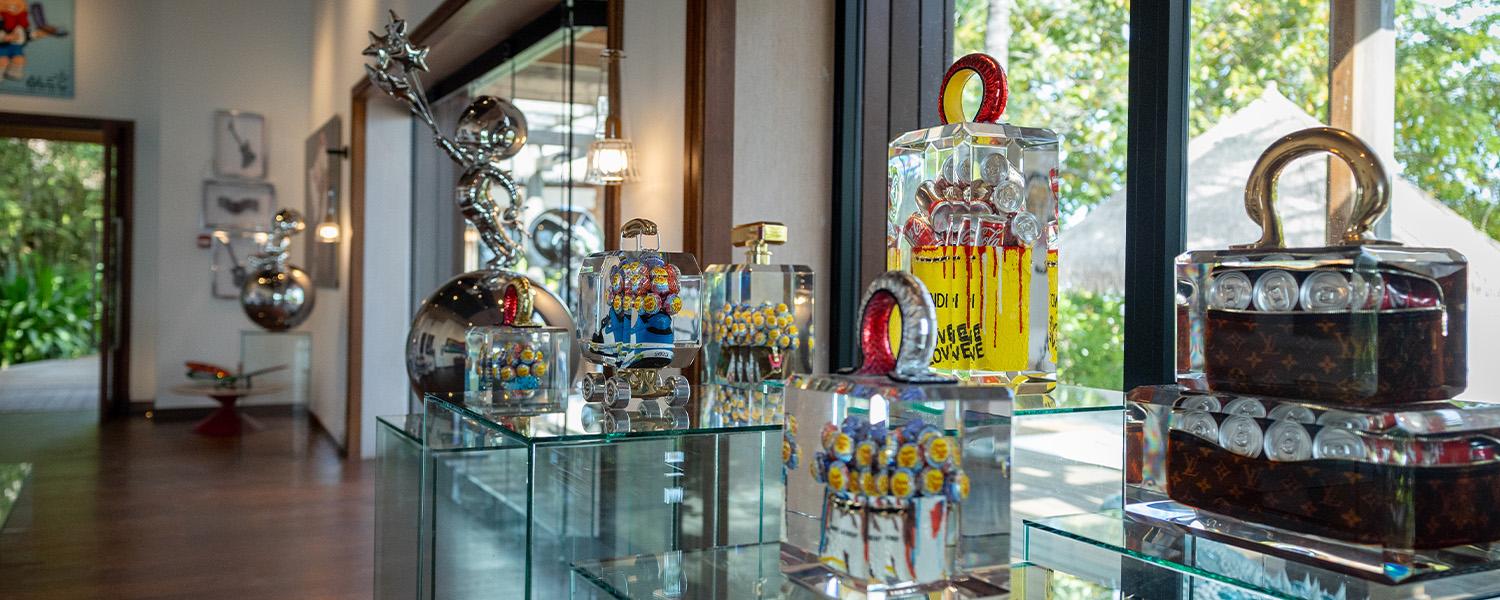
Fred Allard, with his celebrated resin sculpture series and Shopping Bags works, encapsulates the spirit of modern consumerism. He casts high-fashion bags filled with various objects in resin, creating visually striking sculptures that juxtapose luxury, irony, and everyday culture. Encasing handbags, sneakers, and even soda cans, Allard explores the complex nature of constructed identities and conspicuous consumption, inviting viewers to reflect on the objects that define contemporary life.

Fred Allard’s Resin Sculptures
The resin sculpture series of Fred Allard is a testament to his fascination with commerce and consumerism. He casts high-fashion bags filled with various objects in resin, showcasing the irony of conspicuous consumption in a visually striking way. Allard’s works delve into the complex nature of constructed identities and luxury brands, creating a surreal and abstract world that challenges our assumptions about what constitutes art.

PLUM and the Beauty of Material
The childhood of PLUM was filled with the aesthetic stimulation of shapes, colors, and materials. His passion for natural materials and volumes led him to become an artist. PLUM’s approach to art is characterized by his use of feathers to create mesmerizing compositions around luxury brands. His unique style reflects his childhood fascination with shapes, colors, and materials, which he translates into his art.
Although their methods differ, Allard and PLUM both use art as a form of social commentary. Through humor, irony, and a keen sense of aesthetics, they challenge our perceptions of material objects, luxury, and value. By transforming familiar items into works of art, they invite us to see beauty in unexpected places and reconsider the cultural meaning attached to consumer goods.
The Legacy of Found Objects in Art
Even artists like Louise Nevelson have explored the alchemy of the ordinary. Her monumental assemblages, composed of discarded wood and furniture, transformed cast-off materials into intricate, evocative sculptures. Similarly, Joseph Cornell’s shadow boxes turned trinkets and found objects into poetic narratives rich with nostalgia and wonder.
From Duchamp’s ready-made to Warhol’s commercial icons and the contemporary innovations of Alec Monopoly, Fred Allard, and PLUM, the ordinary becomes a canvas for the extraordinary. These artists remind us that art is not confined to traditional materials or techniques, but can emerge from the objects, symbols, and textures that surround us every day.
Through their art, these artists inspire us to look beyond the surface and find beauty and value in unexpected places. By elevating everyday items and natural materials to the realm of luxury art, they urge us to embrace creativity and rethink our relationship with material things. To explore more works that transform the familiar into the extraordinary, visit Eden Gallery.
What is conceptual art?
Conceptual art prioritizes the idea behind the work over traditional craftsmanship. As seen in Marcel Duchamp’s work, even ordinary objects can become art when presented with intention.
Why do artists use everyday objects in their work?
Everyday objects are familiar and relatable, making them powerful tools to explore themes like identity, culture, and consumerism in a direct and impactful way.
How did Pop Art change the perception of art?
Artists like Andy Warhol blurred the line between commercial goods and fine art, encouraging viewers to see beauty and meaning in mass-produced items.
What do contemporary artists explore through these objects?
Artists such as Alec Monopoly and Fred Allard examine modern life through themes of luxury, status, and consumer behavior, often using irony and contrast.
RELATED ARTICLES

EDEN
Updated: March 25, 2026What Is Drawing?
Drawing is one of the most commonly recognized forms of visual art. Drawings are created by an artist using instruments to create lines on paper or another two-dimensional surface.

EDEN
Updated: January 07, 2026Inside the Minds of EDEN Art Collectors
The Collectors Behind the Canvas offers an intimate look into the lives of EDEN collectors around the world. From Abu Dhabi to Dubai, discover how Dan and Nadia Feldman and Yann and Lana Biojau live surrounded by color, creativity, and meaning—revealing ...

EDEN
Updated: January 29, 2026How to Buy Art from EDEN
How to Buy Art from EDEN is your step-by-step guide to collecting art with confidence and joy. From discovering artists online to receiving personalized consultation and seamless delivery, EDEN transforms buying art into a meaningful, guided experience ...
Show more
Join Our
NEWSLETTER
Stay updated with the latest from the EDEN House of Art—be the first to discover new events, collections, and more!